
How do you solve a problem like Maria?
The first step to solving a problem is figuring out if it is in fact, a problem

Big things are happening in the world. Mamdani is pretty much declaring war on New York City Jews. Iranian people are rising up while keffiyeh wearing progressives are haunting my local farmers’ market. People more qualified than I are speaking to these and other large issues of our time, so I will do the one thing I feel extremely qualified to do this morning:
Get the entire Sound of Music soundtrack stuck in your head for the foreseeable future.
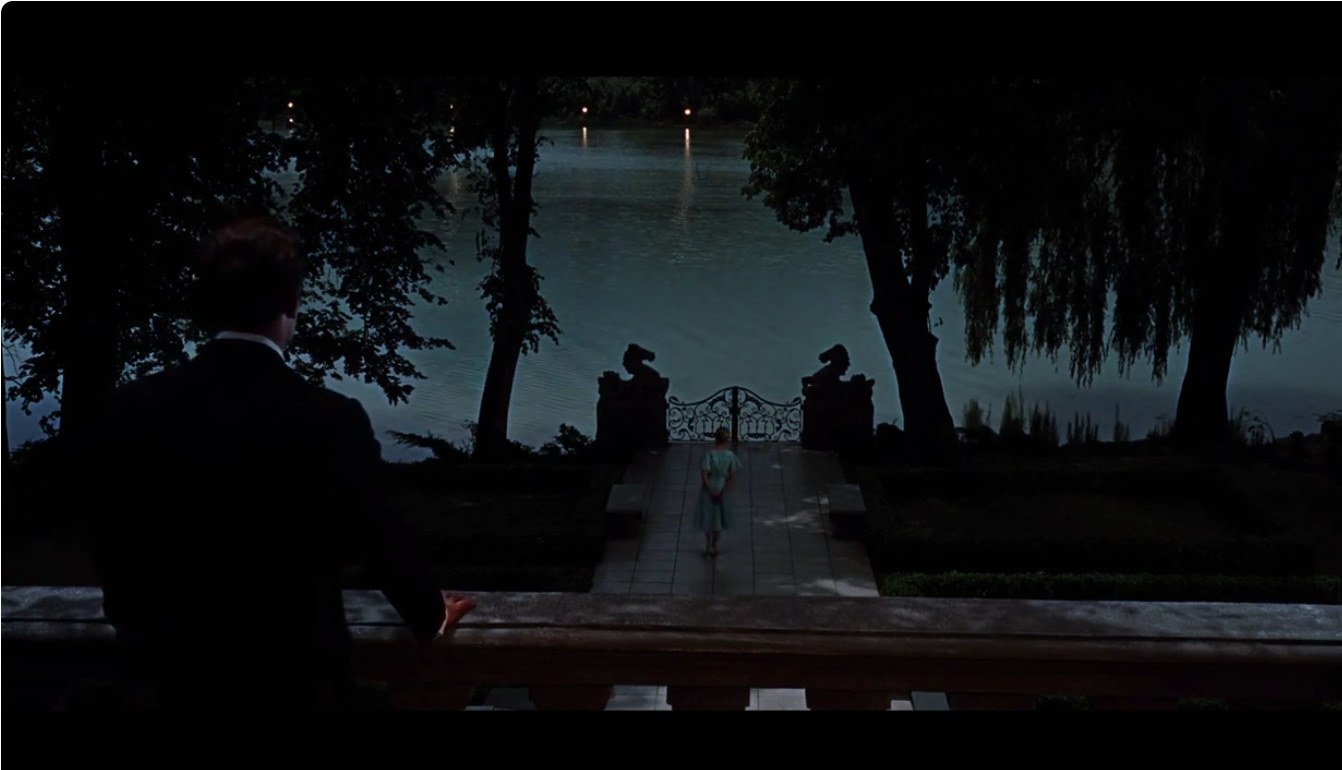
The Sound of Music was and is one of my favorite movies of all time. There is something so warm and beautiful about the love story, the absolute certainty that Maria and the Captain were right and the Nazis were wrong, and the music. I love the music. Forgive me if you must… if you can.
My mom took me to see the movie in a giant old theater, and I sang the songs from then on. I can’t even remember how old I was. What I do recall is that I did not particularly identify with Maria. I was a very serious child, always on time for everything, straight A’s, attempting to be obedient with every fiber of my being (a defect that I made up for in spades many years later, but that need not detain us now or ever.) I did not see myself in Maria’s little mistakes, lack of subtlety, or enthusiasm.
Now I do.
Seven children run amok, putting spiders into the governess’ bed, a captain who won’t crack a smile since his wife died, no play clothes, and I bet she didn’t get paper for the copier either. Maria’s meeting with the Reverend Mother where she learns that she is to be a governess was not that different from how I became a teacher. It was not what I had planned, but it appeared to be what God had planned.
Children can be absolute devils and charming angels all at once. When they lack for attention, they will find ways to get it. Maria figured out exactly what the children needed - a large part of which was their father back in their lives. She understood that she had very little official power in the situation, so she had to live by her wits, humor, and gift for music. She took the children exactly as they were - not as they were supposed to be. And as such she became the closest thing to a mother they could have.
I suppose I was thinking of great love stories because January 1 was the 25th wedding anniversary of two of my favorite people, friends from college who were obviously meant for each other. Some marriages make you think that G-d and humans occasionally work together to get it right. We all knew these kids were supposed to be together, and eventually they married and had a family.
Maria and the Captain were a very different love story. I suppose some are attracted to the Captain’s cold, calm authority. I liked him better when he warmed up. And there was nothing all that innocent about Maria. But watching the two of them, especially in the second half of the movie, you think to yourself, ‘These are people who can hold it together in a world that is coming apart.”
We need more of these people, both real and fictional. Wouldn’t you rather vote for either Maria or Captain Von Trapp over anyone you can think of except maybe Josh Shapiro?
All the things that make Maria “not an asset to the abbey” make her ideal for her unusual role as first governess then wife. She was adept at improv. Her faith was very nearly unshakable. She was willing to take big chances.
But even she ran away at the possibility of having fallen in love with the captain… or rather, that he might have fallen in love with her.
The captain indeed had a problem with Maria: he solved it by marrying her. She did not have the life she had always thought she would: “And somewhere out there is a young lady who I think will never be a nun.”
Well, I have that in common with Maria!
When I look at the movie now, all the characters appear young. I’m hitting that age when actual adults whose opinions I respect were in elementary school when I was in college!
There is something about teaching that makes me younger though. As winter break draws to a close, I lament that my kitchen is not as sparkling as I might like it to be, and I will miss being able to sleep until 5:45 am instead of being up at the strike of 5, but I miss the kids. I miss being “STICKER LADY!” and seeing young people who desperately need warmth and attention recognize a bit of kindness from me.
My old friend once described problems as falling into three categories: strategic, tactical, and logistical. I doubt that he came up with this framework, but he explained it perfectly. A strategic problem boils down to: “What are we trying to do here?” A tactical problem is, “How do we do it?” A logistical problem is, “How do I get this sticker off of its sticker roll and get in to the kid before the bell rings?” or “How do I parallel park my car?” (never, until Rivka teaches me!)
Often, my old friend pointed out, logistical problems are actually strategic problems in disguise. Have you ever gotten hung up on what seemed to be an insolvable logistical problem, only to discover you didn’t want to do the thing in the first place? Logistics have a way of solving themselves once you commit to the strategy. Not always, but often.
By attempting to become a nun, Maria was avoiding her true nature. She would never fit into the life of the convent, no matter how much she loved God, the Reverend Mother, her sisters or the music. So logistical problems cropped up. “She’s always late for chapel but her penitence is real.”
Rather than create an endless series of logistical problems, it is more efficient to solve the strategic problem.
As it turns out, Maria wasn’t a problem at all. She was the solution.
I hope you enjoy the rest of your day with The Sound of Music humming in your head!
The hills are alive!
And out there somewhere is a young lady who I think will never be a nun.
This movie resonates with me too. I think that your analysis is very insightful.
Julie Andrews played both Maria and Mary Poppins. Coincidence??